FIFA President Sepp Blatter is focus of Swiss probe, officials say
By James Masters, CNN
Updated 1555 GMT (2255 HKT) September 26, 2015

14 photos: Sepp Blatter - key moments in pictures
In December 2010, Blatter was heavily criticized for suggesting gay football fans should "refrain from sexual activity" if they wished to attend the 2022 World Cup in Qatar, where homosexuality is illegal. Blatter later apologized and said it had not been his intention to offend or discriminate.
Hide Caption
8 of 14

14 photos: Sepp Blatter - key moments in pictures
In December 2010 Blatter insisted that FIFA was "not corrupt ... there are no rotten eggs" despite two of his executive committee members -- Amos Adamu, pictured, and Reynald Temarii -- being suspended for accepting bribes in the lead-up to the vote for awarding hosting rights for the 2018 and 2022 World Cups. He called England "bad losers" after losing out to Russia.
Hide Caption
9 of 14

14 photos: Sepp Blatter - key moments in pictures
A Manchester City fan displays a banner with a message for FIFA President Sepp Blatter regarding his handling of allegations of racism in football in 2011. Blatter had earlier suggested that incidents of racism on the pitch could be sorted out with a handshake when a game finished.
Hide Caption
10 of 14

14 photos: Sepp Blatter - key moments in pictures
In January 2013, AC Milan midfielder Kevin-Prince Boateng led his team off the pitch after being subjected to racist chanting. His actions were hailed across the world. But Blatter was more cautious about the issue, refusing to support the move. "I don't think you can run away, because eventually you can run away if you lose a match," he said in an interview with a newspaper in the UAE. "This issue is a very touchy subject, but I repeat there is zero tolerance of racism in the stadium; we have to go against that." Others, like AC Milan president Silvio Berlusconi, have disagreed with him. "I am of the opposite view (to Blatter)," said Berlusconi. "I thanked and congratulated my players for their decision to leave the field."
Hide Caption
11 of 14

14 photos: Sepp Blatter - key moments in pictures
While Blatter has overseen the first World Cups in Africa and Asia -- South Africa in 2010 and Japan and South Korea in 2002 -- he has also presided over a decline in the public's perception of FIFA. Corruption allegations surrounded the bidding process relating to the 2018 and 2022 World Cups, awarded to Russia and Qatar respectively.
Hide Caption
12 of 14

14 photos: Sepp Blatter - key moments in pictures
FIFA has also been heavily criticized for the employment conditions of workers building stadiums and infrastructure in Qatar for the 2022 World Cup. In early May 2015, Amnesty International released a report stating that FIFA was failing to demonstrate any sort of commitment to ensuring Qatar 2022 is "not built on a foundation of exploitation and abuse."
Hide Caption
13 of 14

14 photos: Sepp Blatter - key moments in pictures
Blatter is currently seeking another term at the head of FIFA. His only challenger is FIFA Vice-President Prince Ali bin al-Hussein from Jordan (right) although Blatter is widely expected to win.
Hide Caption
14 of 14
14 photos: Sepp Blatter - key moments in pictures
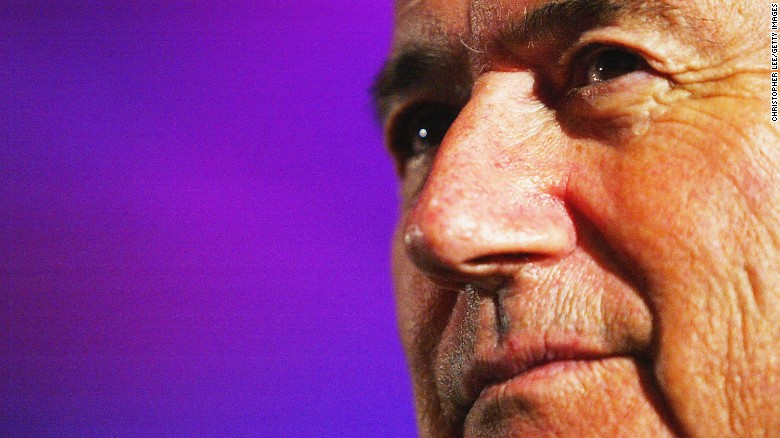
Sepp Blatter has been president of FIFA, football's world governing body, since 1998.
Hide Caption
1 of 14

14 photos: Sepp Blatter - key moments in pictures
The 79-year-old Swiss has dominated the world's most popular sport over this 17-year period, although his reign not been without controversy.
Hide Caption
2 of 14

14 photos: Sepp Blatter - key moments in pictures
Blatter faced a criminal investigation after winning the 2002 FIFA presidential election, being accused of financial mismanagement by 11 former members of the ruling body's executive committee, including his 1998 election rival Lennart Johansson. However, prosecutors dropped the case due to a lack of evidence.
Hide Caption
3 of 14

14 photos: Sepp Blatter - key moments in pictures
In 2004, Blatter angered female footballers with his suggestion for how the women's game could be made more appealing. "They could, for example, have tighter shorts," said the Swiss. "Let the women play in more feminine clothes like they do in volleyball."
Hide Caption
4 of 14

14 photos: Sepp Blatter - key moments in pictures
In 2008 Blatter was ridiculed after defending the desire of Manchester United's highly-paid star Cristiano Ronaldo to join Real Madrid. He said: "I think in football there's too much modern slavery in transferring players or buying players here and there, and putting them somewhere." In 2013 he had to apologize to Ronaldo after a bizarre impersonation of the Madrid star.
Hide Caption
5 of 14

14 photos: Sepp Blatter - key moments in pictures
Blatter performed a U-turn on the use of goal-line technology and apologized to the English Football Association after an incorrect decision during the 2010 World Cup. Despite replays showing a shot from England's Frank Lampard had clearly crossed the line in the last-16 clash with Germany, the goal was not awarded.
Hide Caption
6 of 14

14 photos: Sepp Blatter - key moments in pictures
In 2010, when England captain John Terry, who is married, was reported to have been involved with the partner of his former Chelsea teammate Wayne Bridge, Blatter responded: "If this had happened in, let's say, Latin countries then I think he would have been applauded."
Hide Caption
7 of 14
14 photos: Sepp Blatter - key moments in pictures
In December 2010, Blatter was heavily criticized for suggesting gay football fans should "refrain from sexual activity" if they wished to attend the 2022 World Cup in Qatar, where homosexuality is illegal. Blatter later apologized and said it had not been his intention to offend or discriminate.
Hide Caption
8 of 14
14 photos: Sepp Blatter - key moments in pictures
In December 2010 Blatter insisted that FIFA was "not corrupt ... there are no rotten eggs" despite two of his executive committee members -- Amos Adamu, pictured, and Reynald Temarii -- being suspended for accepting bribes in the lead-up to the vote for awarding hosting rights for the 2018 and 2022 World Cups. He called England "bad losers" after losing out to Russia.
Hide Caption
9 of 14
14 photos: Sepp Blatter - key moments in pictures
A Manchester City fan displays a banner with a message for FIFA President Sepp Blatter regarding his handling of allegations of racism in football in 2011. Blatter had earlier suggested that incidents of racism on the pitch could be sorted out with a handshake when a game finished.
Hide Caption
10 of 14
14 photos: Sepp Blatter - key moments in pictures
In January 2013, AC Milan midfielder Kevin-Prince Boateng led his team off the pitch after being subjected to racist chanting. His actions were hailed across the world. But Blatter was more cautious about the issue, refusing to support the move. "I don't think you can run away, because eventually you can run away if you lose a match," he said in an interview with a newspaper in the UAE. "This issue is a very touchy subject, but I repeat there is zero tolerance of racism in the stadium; we have to go against that." Others, like AC Milan president Silvio Berlusconi, have disagreed with him. "I am of the opposite view (to Blatter)," said Berlusconi. "I thanked and congratulated my players for their decision to leave the field."
Hide Caption
11 of 14
14 photos: Sepp Blatter - key moments in pictures
While Blatter has overseen the first World Cups in Africa and Asia -- South Africa in 2010 and Japan and South Korea in 2002 -- he has also presided over a decline in the public's perception of FIFA. Corruption allegations surrounded the bidding process relating to the 2018 and 2022 World Cups, awarded to Russia and Qatar respectively.
Hide Caption
12 of 14
14 photos: Sepp Blatter - key moments in pictures
FIFA has also been heavily criticized for the employment conditions of workers building stadiums and infrastructure in Qatar for the 2022 World Cup. In early May 2015, Amnesty International released a report stating that FIFA was failing to demonstrate any sort of commitment to ensuring Qatar 2022 is "not built on a foundation of exploitation and abuse."
Hide Caption
13 of 14
14 photos: Sepp Blatter - key moments in pictures
Blatter is currently seeking another term at the head of FIFA. His only challenger is FIFA Vice-President Prince Ali bin al-Hussein from Jordan (right) although Blatter is widely expected to win.
Hide Caption
14 of 14
14 photos: Sepp Blatter - key moments in pictures
Sepp Blatter has been president of FIFA, football's world governing body, since 1998.
Hide Caption
1 of 14
14 photos: Sepp Blatter - key moments in pictures
The 79-year-old Swiss has dominated the world's most popular sport over this 17-year period, although his reign not been without controversy.
Hide Caption
2 of 14
14 photos: Sepp Blatter - key moments in pictures
Blatter faced a criminal investigation after winning the 2002 FIFA presidential election, being accused of financial mismanagement by 11 former members of the ruling body's executive committee, including his 1998 election rival Lennart Johansson. However, prosecutors dropped the case due to a lack of evidence.
Hide Caption
3 of 14
14 photos: Sepp Blatter - key moments in pictures
In 2004, Blatter angered female footballers with his suggestion for how the women's game could be made more appealing. "They could, for example, have tighter shorts," said the Swiss. "Let the women play in more feminine clothes like they do in volleyball."
Hide Caption
4 of 14
14 photos: Sepp Blatter - key moments in pictures
In 2008 Blatter was ridiculed after defending the desire of Manchester United's highly-paid star Cristiano Ronaldo to join Real Madrid. He said: "I think in football there's too much modern slavery in transferring players or buying players here and there, and putting them somewhere." In 2013 he had to apologize to Ronaldo after a bizarre impersonation of the Madrid star.
Hide Caption
5 of 14
14 photos: Sepp Blatter - key moments in pictures
Blatter performed a U-turn on the use of goal-line technology and apologized to the English Football Association after an incorrect decision during the 2010 World Cup. Despite replays showing a shot from England's Frank Lampard had clearly crossed the line in the last-16 clash with Germany, the goal was not awarded.
Hide Caption
6 of 14
14 photos: Sepp Blatter - key moments in pictures
In 2010, when England captain John Terry, who is married, was reported to have been involved with the partner of his former Chelsea teammate Wayne Bridge, Blatter responded: "If this had happened in, let's say, Latin countries then I think he would have been applauded."
Hide Caption
7 of 14


Story highlights
- Swiss prosecutors open criminal investigation against Sepp Blatter
- Blatter's lawyer says "no mismanagement occurred"
- FIFA says it is cooperating with investigation
(CNN)Sepp Blatter's tenure as FIFA president suffered a new blow after the Swiss attorney general opened an investigation targeting him on "suspicion of criminal mismanagement."
A statement released by the office of the attorney general of Switzerland confirmed it was examining a contract signed by Blatter with the Caribbean Football Union and an alleged "disloyal payment" of 2 million Swiss francs (about $2 million US) to Michel Platini, the head of European football body UEFA.
Former senior FIFA official Jack Warner was indicted in a wide-ranging bribery scandal, while Platinientered the race to succeed Blatter as FIFA president in July.
The statement was released after Blatter, who has been in charge of soccer's world governing body since 1998, was interrogated by the Swiss attorney general's representatives Friday following a meeting of the FIFA executive committee in Zurich.
Blatter's lawyer. Richard Cullen, said that "no mismanagement occurred."
In a statement sent to CNN, Cullen said: "We're confident that when the Swiss authorities have a chance to review the documents and the evidence they will see that the contract was properly prepared and negotiated by the appropriate staff members of FIFA."

The attorney general's office confirmed that it had conducted a search at FIFA headquarters -- including Blatter's office -- with the help of the police and there was "data seized."
"The (Swiss attorney general's office) suspects that on 12 September 2005 Mr. Joseph Blatter has signed a contract with the Caribbean Football Union (with Jack Warner as the President at this time); this contract was unfavorable for FIFA," said the statement, referring to Blatter by his given name.
"On the other hand, there is as suspicion that, in the implementation of this agreement, Joseph Blatter also violated his fiduciary duties and acted against the interest of FIFA and/or FIFA Marketing & TV AG.
"Additionally, Mr. Joseph Blatter is suspected of a disloyal payment of two million Swiss Francs to Michel Platini, President of Union of European Football Association (UEFA), at the expense of FIFA, which was allegedly made for work performed between January 1999 and June 2002 ; this payment was executed in February 2011," added the statement.

UEFA was not immediately available for comment after the attorney general's office said that Platini had been "heard as a person asked to provide information," while one of Warner's officials told CNN "he wouldn't be saying anything."
Platini, who became president of UEFA in 2007, is also a vice president of FIFA.
The 60-year-old became a member of FIFA's executive committee in 2002 as well as chairman of the technical development committee and worked on the 2006 World Cup organizing committee.
Platini said he was cooperating with authorities and denied any wrongdoing in a statement obtained by CNN.
"Regarding the payment that was made to me, I wish to state that this amount relates to work which I carried out under a contract with FIFA and I was pleased to have been able to clarify all matters relating to this with the authorities," the statement said.
In a statement, FIFA said it had been "cooperating" and has "complied with all requests for documents, date and other information."
It added: "We will continue this level of cooperation throughout the investigation. We will have no further comment on the matter as it is an active investigation."
The incident comes eight days after Secretary General Jerome Valcke was suspended by FIFA, while the organization investigates allegations he participated in a scheme to profit off the sale of World Cup tickets on the black market.
Valcke has been relieved of his duties until further notice.

32 photos: FIFA corruption scandal timeline
October 21, 2011 – Sepp Blatter announces the introduction of four new task forces and a "Committee of Good Governance" aimed at reforming the organization and repairing its reputation.
Hide Caption
17 of 32
32 photos: FIFA corruption scandal timeline
March 30, 2012 – FIFA announces its executive committee has approved proposed changes to its Ethics Committee, splitting it into two entities -- one to investigate allegations and another to rule on them. It follows a report by the Independent Governance Committee (IGC) commissioned after Mohamed Bin Hammam's ban, that found FIFA's past handling of corruption scandals had been "unsatisfactory."
Hide Caption
18 of 32

32 photos: FIFA corruption scandal timeline
April 24, 2012 – The Council of Europe, a watchdog that oversees the European Court of Human Rights,criticizes Sepp Blatter in a damning report into FIFA's handling of bribery allegations. The report says it would be "difficult to imagine" that the FIFA president would have been unaware of "significant sums" paid to unnamed FIFA officials by sports marketing company International Sports and Leisure (ISL) in connection with lucrative contracts for World Cup television rights. However it makes no allegations that he had any involvement in corruption.
Hide Caption
19 of 32

32 photos: FIFA corruption scandal timeline
July 17, 2012 – Sepp Blatter announces that former U.S. attorney Michael J Garcia and German judge Hans-Joachim Eckert (pictured) have joined FIFA to probe allegations of wrongdoing. Their first task will be to investigate a Swiss court document after an investigation into alleged illegal payments made by FIFA marketing partner ISL to former FIFA president Joao Havelange and former executive committee member Ricardo Teixeira. However, they will also investigate old cases -- including the process surrounding the decision to award the 2018 and 2022 World Cups to Russia and Qatar. Meantime, Mohamed Bin Hamman is again suspended over new corruption allegations by the Asian Football Confederation (AFC), which he used to lead. Bin Hammam says he is innocent but in December 2012 he resigns all his football positions after a FIFA report finds him guilty of violating the conflict of interest clauses in its Code of Ethics and bans him from all football-related activity for life.
Hide Caption
20 of 32

32 photos: FIFA corruption scandal timeline
December 17, 2012 – President of the South African Football Association (SAFA) Kirsten Nematandani (pictured) and four other SAFA officials are suspended as an act of "good governance" following a report by FIFA, which adjudged four friendly matches ahead of Africa's first World Cup in 2010 had been fixed. SAFA later decides FIFA went beyond its mandate in suspending them before its investigation had concluded and reinstates the officials to their posts. In May 2015, Nematandani tells South African broadcaster ANN7 he has yet to hear from FIFA in relation to the investigation. "This is about my reputation," he says. "My name has to be cleared."
Hide Caption
21 of 32

32 photos: FIFA corruption scandal timeline
January 9, 2013 – FIFA imposes a worldwide lifetime ban from football on 41 players from Korea who became embroiled in match-fixing activities in their domestic league, extending a ban handed down by the Korea Football Association (KFA) in 2011. The charges relate to alleged match-fixing in Korea's domestic K-League competition. All but one case were centered on offering or accepting bribes to throw matches.
Hide Caption
22 of 32

32 photos: FIFA corruption scandal timeline
February 4, 2014 – A report by police agency Europol reveals that 380 matches across Europe have been fixedby an Asia-based crime syndicate, including World Cup and European Championship qualifiers as well as the continent's top club competitions. Scores of people have been arrested across 15 countries, it says. FIFA vows to act on the revelations, but says it will need help from outside agencies to eradicate match-fixing.
Hide Caption
23 of 32
32 photos: FIFA corruption scandal timeline
March 11, 2013 – FIFA says executive committee member Vernon Manilal Fernando of Sri Lanka has been suspended at the request of Michael Garcia and Hans-Joachim Eckert, co-chairs of the investigatory and adjudicatory bodies of the Ethics Committee respectively. No details of his alleged transgression were released, but FIFA said the decision was based on alleged violations of its Code of Ethics, including conflicts of interest, offering and accepting bribes, bribery and corruption, "in order to prevent the interference with the establishment of the truth with respect to proceedings now in the adjudicatory chamber." He is later given a lifetime ban, which he unsuccessfully appeals to the Court of Arbitration for Sport.
Hide Caption
24 of 32

32 photos: FIFA corruption scandal timeline
April 30, 2013 – An internal investigation by FIFA's Ethics Committee clears Sepp Blatter of misconduct in the bribery scandal, but his predecessor, Brazilian Joao Havelange, resigns as honorary president for his part in the scandal. Havelange and former executive committee members Ricardo Teixeira and Nicolas Leoz were all found to have accepted illegal payments from former marketing partner International Sports and Leisure (ISL) between 1992 and 2000.
Hide Caption
25 of 32
32 photos: FIFA corruption scandal timeline
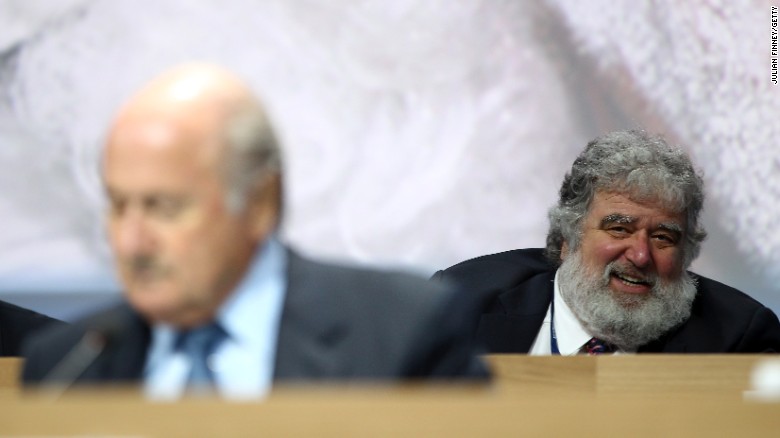
May 6, 2013 – FIFA's Ethics Committee suspends outgoing executive committee member Chuck Blazer (pictured back right) for 90 days "based on the fact that various breaches of the Code of Ethics appear to have been committed" by the American. Blazer is former general secretary of CONCACAF, the body which governs football in North and Central America and the Caribbean, and his suspension follows a report by its integrity committee. Blazer denies any wrongdoing.
Hide Caption
26 of 32

32 photos: FIFA corruption scandal timeline
June 13, 2014 – German footballer Franz Beckenbauer, the only man to win the World Cup as captain and coach, is provisionally suspended from any football-related activity for 90 days for failing to cooperate with a FIFA corruption investigation. FIFA says Beckenbauer had been asked to help with its Ethics Committee's probe into allegations against Qatar 2022 and the World Cup bidding process. Beckenbauer tells German media that he did not respond to questions by the chairman of the Ethics Committee's investigatory body because they were in English and he did not understand them.
Hide Caption
27 of 32

32 photos: FIFA corruption scandal timeline
Hans-Joachim Eckert (pictured), chairman of the adjudicatory chamber of FIFA's Ethics Committee, releases a summary of the committee's investigation into the bidding process for the 2018 and 2022 World Cup. The summary, by Eckert, says Qatar and Russia were not guilty of any alleged corruption, clearing them of wrongdoing. Michael Garcia, the author of the full report, and chairman of the Ethics Committee's investigatory body, wanted the report to be published in full. Garcia says the summary contains "incomplete and erroneous representations of the facts and conclusions detailed in the investigatory chamber's report."
Hide Caption
28 of 32
32 photos: FIFA corruption scandal timeline
November 18, 2014 – FIFA lodges a criminal complaint with the Swiss judiciary relating to the "international transfers of assets with connections to Switzerland, which merit examination by the criminal prosecution authorities."
Hide Caption
29 of 32

32 photos: FIFA corruption scandal timeline
December 17, 2014 – Michael Garcia resigns as chairman of the investigatory body of the Ethics Committee, following FIFA's decision to throw out his appeal after he complained about the way his report into the World Cup bidding process had been summarized by Hans-Joachim Eckert.
Hide Caption
30 of 32

32 photos: FIFA corruption scandal timeline
December 19, 2014 – FIFA decides to publish a redacted version of Michael Garcia's investigative report into alleged corruption surrounding the bidding process for the tournaments. The decision was unanimously endorsed by FIFA's 25-person executive committee.
Hide Caption
31 of 32

32 photos: FIFA corruption scandal timeline
May 27, 2015 – At the request of U.S. officials, Swiss authorities raid FIFA's headquarters in Zurich and arrest seven people. Meantime, the U.S. Department of Justice announces the unsealing of a 47-count indictment detailing charges against 14 people for racketeering, wire fraud and money laundering conspiracy. They include FIFA officials accused of taking bribes totaling more than $150 million and in return provided "lucrative media and marketing rights" to soccer tournaments as kickbacks over the past 24 years. Separately Switzerland announces its own investigation into the awarding of the World Cup bids to Russia in 2018 and Qatar in 2022.
Hide Caption
32 of 32
32 photos: FIFA corruption scandal timeline
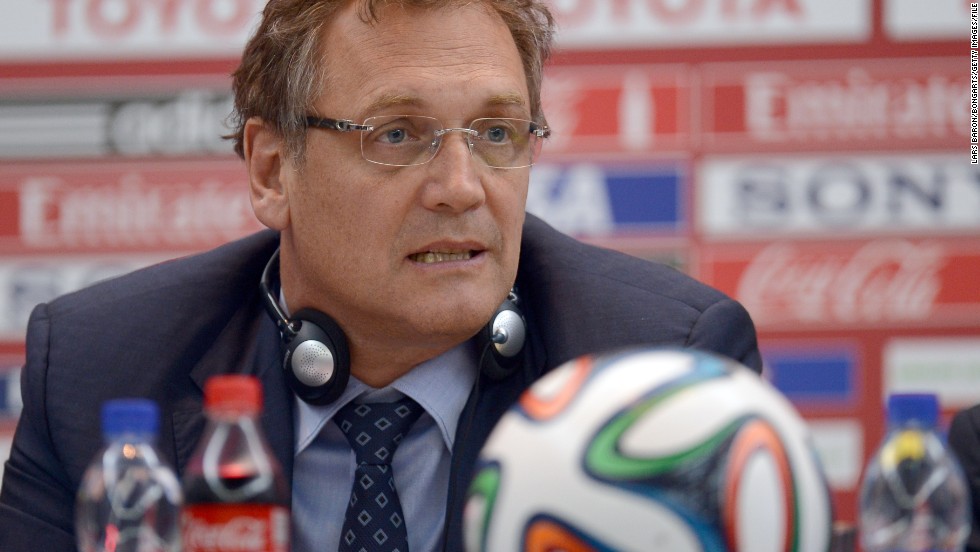
September 17, 2015 – FIFA secretary general Jerome Valcke was suspended until further notice.
Hide Caption
1 of 32
32 photos: FIFA corruption scandal timeline
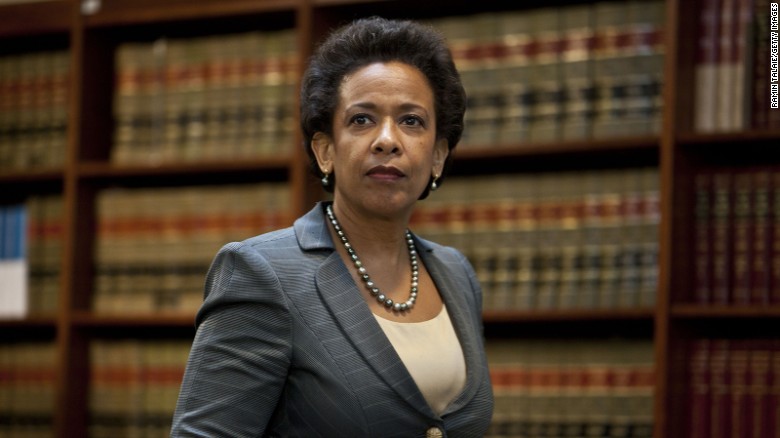
September 14, 2015 – U.S. Attorney General Loretta Lynch announces that 'additional charges against individuals and entities' are likely following the assessment of new evidence.
Hide Caption
2 of 32

32 photos: FIFA corruption scandal timeline
September 9, 2015 – FIFA Vice-President Prince Ali Bin al-Hussein of Jordan adds his name to the list of candidates seeking to replace Sepp Blatter. The election at scandal-hit FIFA is on February 26, 2016.
Hide Caption
3 of 32

32 photos: FIFA corruption scandal timeline
July 30, 2015 – South Korean billionaire and former FIFA vice president, Chung Mong-Joon announces his intention to run for the top job in world soccer.
Hide Caption
4 of 32

32 photos: FIFA corruption scandal timeline
July 29, 2015 – European football chief Michel Platini, seen here with Blatter (left), is the leading candidate to replace the outgoing president. The former France captain is also a vice-president in FIFA's Executive Committee.
Hide Caption
5 of 32
32 photos: FIFA corruption scandal timeline
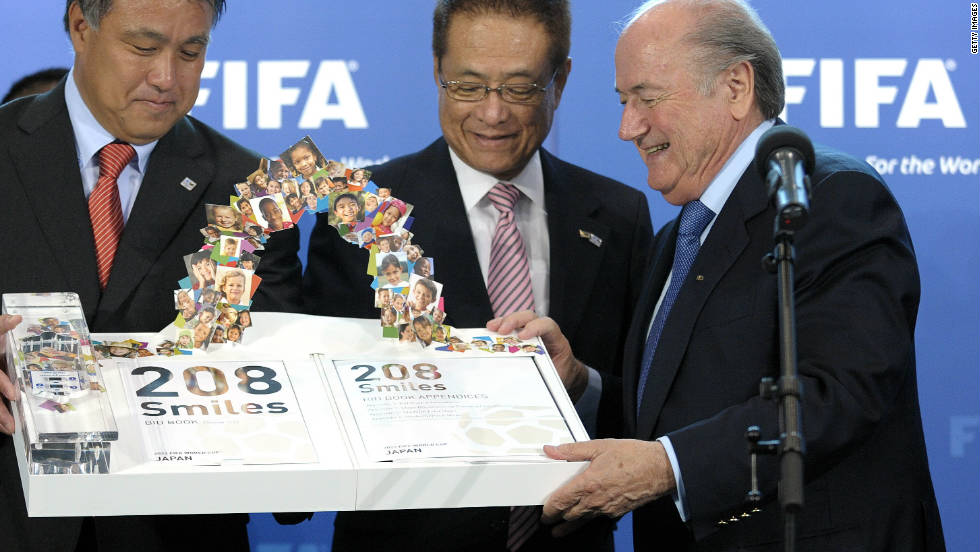
May 14, 2010 – A turbulent period for FIFA began in May 2010 when the world's governing body for soccer was presented with official bid documents by Australia, England, Netherlands/Belgium, Japan, South Korea, Qatar, Russia, Spain/Portugal and the United States for the 2018 and 2022 World Cups. During the ceremony at its Swiss headquarters, FIFA announced dates for inspections of the bidding nations from July-September.
Hide Caption
6 of 32
32 photos: FIFA corruption scandal timeline
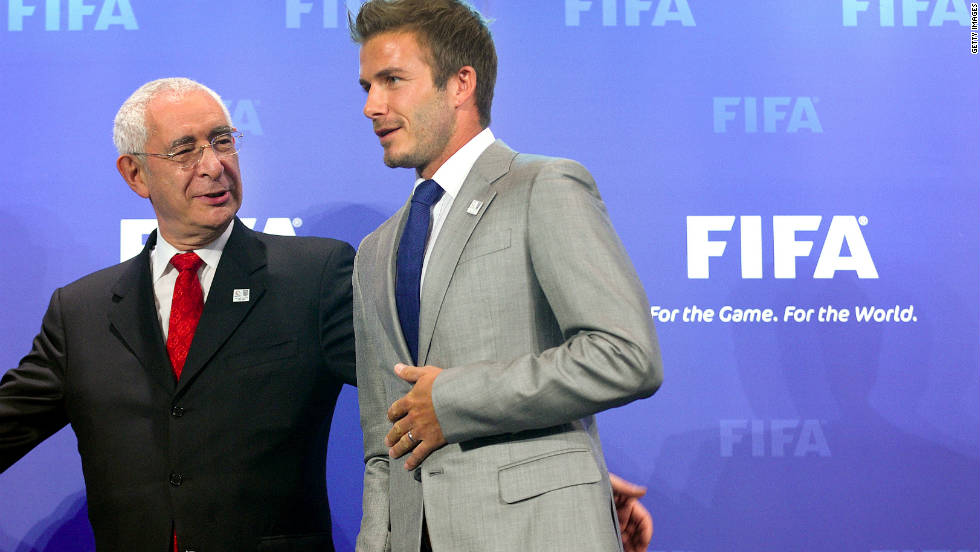
May 16, 2010 – British newspaper Mail On Sunday reveals that English bid leader David Triesman (pictured here with soccer star David Beckham) was secretly recorded making comments about alleged attempts by Spain and Russia to bribe referees at the imminent 2010 FIFA World Cup.
Hide Caption
7 of 32
32 photos: FIFA corruption scandal timeline
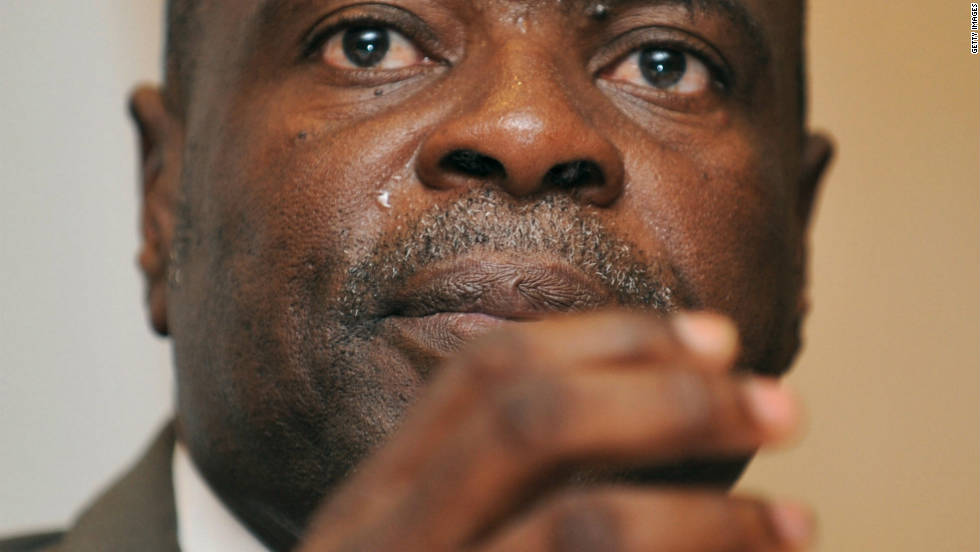
November 18, 2010 – FIFA's Ethics Committee confirms the suspension of six FIFA officials including executive committee members Amos Adamu (pictured) and Reynald Temarii, after claims by Britain's Sunday Times newspaper that they offered to sell their World Cup votes. Adamu receives a three-year ban and $11,947 fine and Temarii a 12-month ban and a $5,973 fine. The committee also rules that there is no evidence to support allegations of collusion between rival bid teams. Both Adamu and Temarii appeal unsuccessfully to FIFA's Appeal Committee and Adamu later also files an unsuccessful appeal to the Court of Arbitration for Sport (CAS). In May 2015, FIFA bans Temarii for another eight years for allegedly accepting money from former Asian Football Confederation president Mohamed Bin Hammam to cover legal costs of his appeal of FIFA's 2010 ban.
Hide Caption
8 of 32

32 photos: FIFA corruption scandal timeline
November 29, 2010 – Issa Hayatou from Cameroon (pictured) is one of three FIFA officials -- the others Nicolas Leoz from Paraguay and Ricardo Teixeira from Brazil -- who are named in a BBC program which alleges they took bribes from the International Sports and Leisure (ISL) marketing company who secured World Cup rights in the 1990s. A day later, Hayatou says he is considering legal action against the BBC. All three would have voted on the hosts for the 2018 and 2022 World Cups. The International Olympic Committee's Ethics Commission later looks into the claims against Hayatou -- as he was an IOC member. It finds he had personally received a sum of money from ISL as a donation to finance the African Football Confederation (CAF)'s 40th anniversary and recommends he be reprimanded. In 2013, an internal investigation finds Leoz and Teixeira accepted illegal payments from ISL but says the acceptance of bribe money was not punishable under Swiss law at the time. Its report says that as both have resigned their positions with FIFA further steps over "the morally and ethically reproachable conduct of both persons" are superfluous.
Hide Caption
9 of 32
32 photos: FIFA corruption scandal timeline
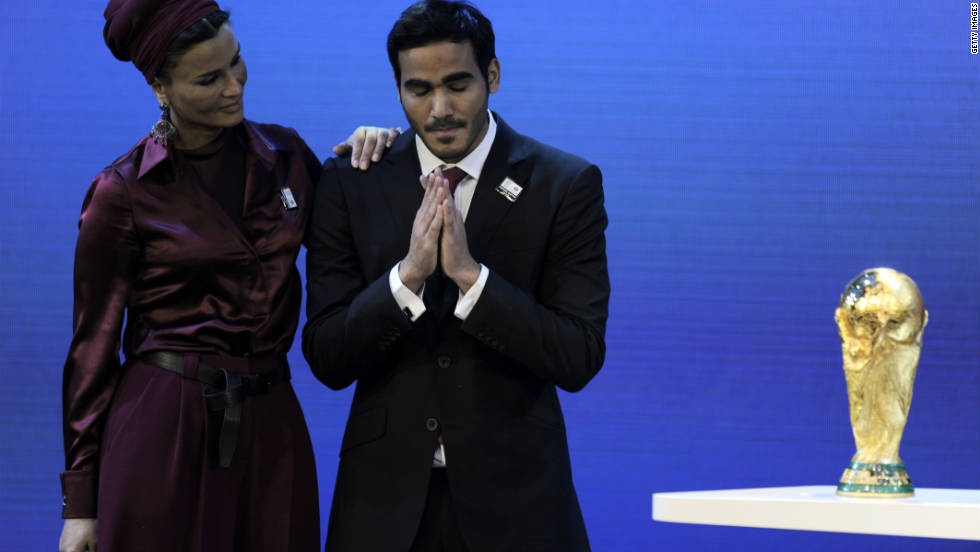
December 2, 2010 – The winning bids for the 2018 and 2022 World Cup finals are announced. Russia wins the bid to host the 2018 tournament. But the big shock came when Blatter announced that Qatar would host the 2022 finals, despite FIFA's bid inspection report stating that hosting the World Cup in June and July would be"considered as a potential health risk for players, officials, the FIFA family and spectators, and requires precautions to be taken."
Hide Caption
10 of 32
32 photos: FIFA corruption scandal timeline
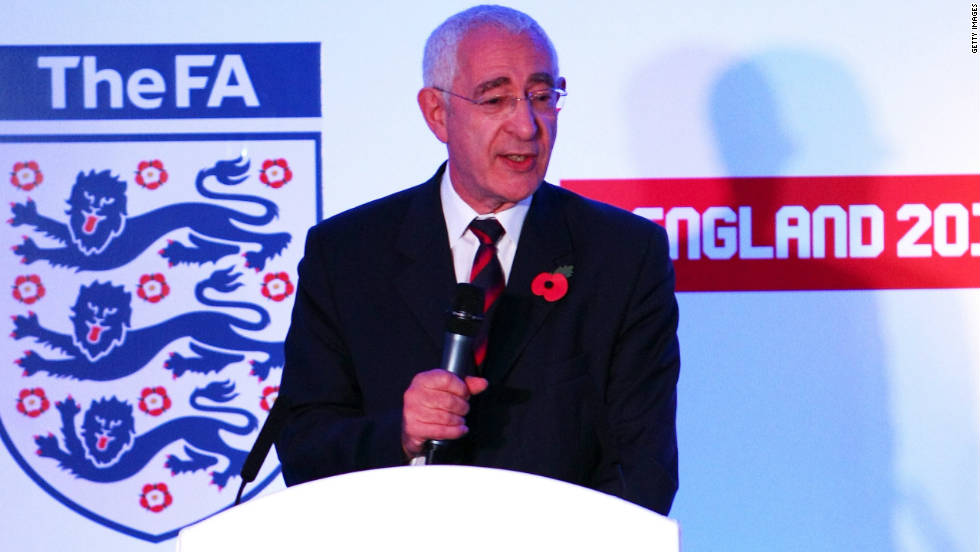
May 10, 2011 – Just a few weeks before FIFA's presidential vote, former English Football Association chairmanDavid Triesman testifies at a UK parliamentary enquiry into England's failed 2018 bid. Under the cover of parliamentary privilege, Triesman accuses FIFA Executive Committee members Jack Warner, Nicolas Leoz, Ricardo Teixeira and Worawi Makudi of trying to secure cash and privileges in return for their vote. In other evidence submitted to the committee from the Sunday Times, it was alleged that FIFA vice-president Issa Hayatou along with fellow Executive Committee member Jacques Anouma has been paid $1.5 million to vote for Qatar as the 2022 World Cup host. All those accused, and the Qatar Football Association, strenuously deny the allegations.
Hide Caption
11 of 32

32 photos: FIFA corruption scandal timeline
May 26, 2011 – FIFA announces it will investigate Jack Warner (pictured), who ran the CONCACAF federation covering Central and North America, and Mohamed Bin Hammam, head of the Asian Football Confederation, over bribery allegations. It follows a report by fellow Executive Committee member Chuck Blazer alleging that they paid $40,000 worth of bribes to secure the support of members of the Caribbean Football Union. They deny the claims, with Warner promising a "tsunami" of revelations to clear his name. Bin Hammam claims the accusations are part of a plan to force him to withdraw as a candidate for FIFA's presidency. He is incumbent Sepp Blatter's only opponent in FIFA's presidential election due to be held June 1.
Hide Caption
12 of 32
32 photos: FIFA corruption scandal timeline
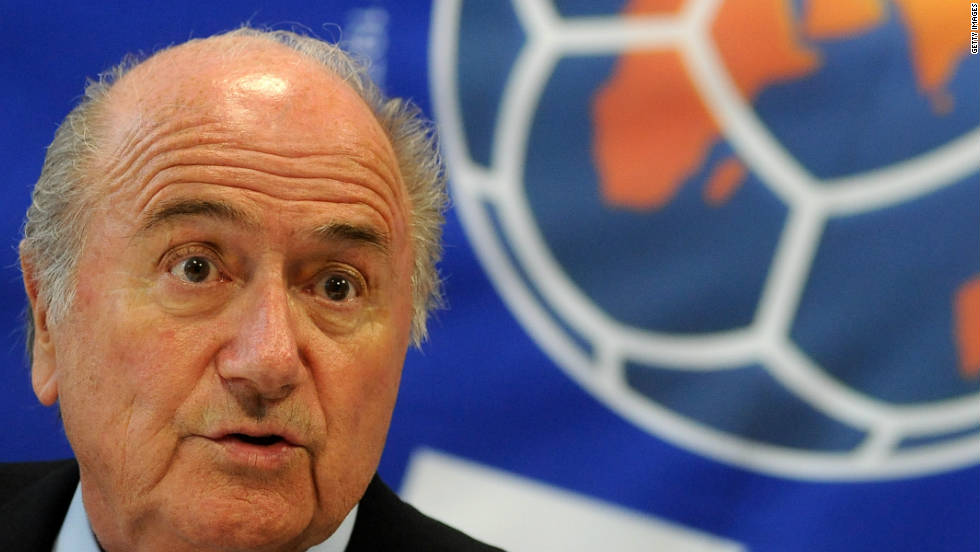
May 27, 2011 – FIFA says it will expand its corruption probe to include Sepp Blatter, after Mohamed Bin Hammam claimed Blatter knew about cash payments he was accused of giving to national football association in exchange for pro-Hammam votes during Qatar's 2022 World Cup bid. Blatter maintains that the allegations are "without substance," and two days later is exonerated by FIFA's Ethics Committee.
Hide Caption
13 of 32
32 photos: FIFA corruption scandal timeline
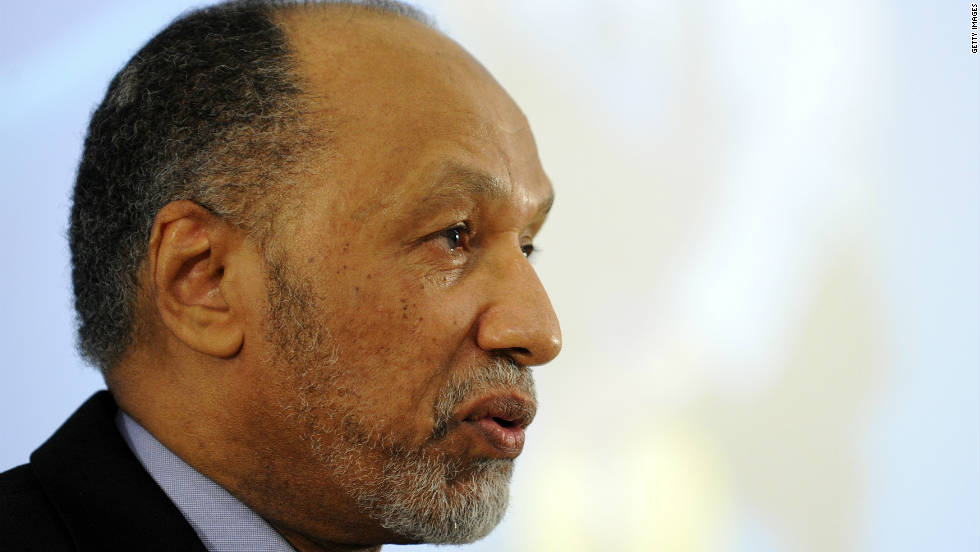
May 29, 2011 – But FIFA's Ethics Committee upholds the complaints against Mohamed Bin Hammam (pictured) and Jack Warner. Bin Hammam is effectively barred from standing in the FIFA leadership election. Warner's tsunami turns out to be an email, where secretary general Jerome Valcke seems to suggest that Qatar "bought" the right to host the 2022 World Cup. After initially threatening legal action, Qatar withdraws its complaint when Valcke explains he was referring to Qatar's large, and legal, campaign budget, rather than bribes. Warner faces no further action following his resignation and the presumption of innocence remains.
Hide Caption
14 of 32

32 photos: FIFA corruption scandal timeline
June 1, 2011 – Despite a last minute attempt by the English FA to postpone the vote -- a proposal which garnered just 17 out of the available 208 votes -- Sepp Blatter is re-elected for a fourth term as president of FIFA at the 61st FIFA Congress at Hallenstadion in Zurich. He vows to learn from past mistakes and undertake a reform agenda.
Hide Caption
15 of 32
32 photos: FIFA corruption scandal timeline
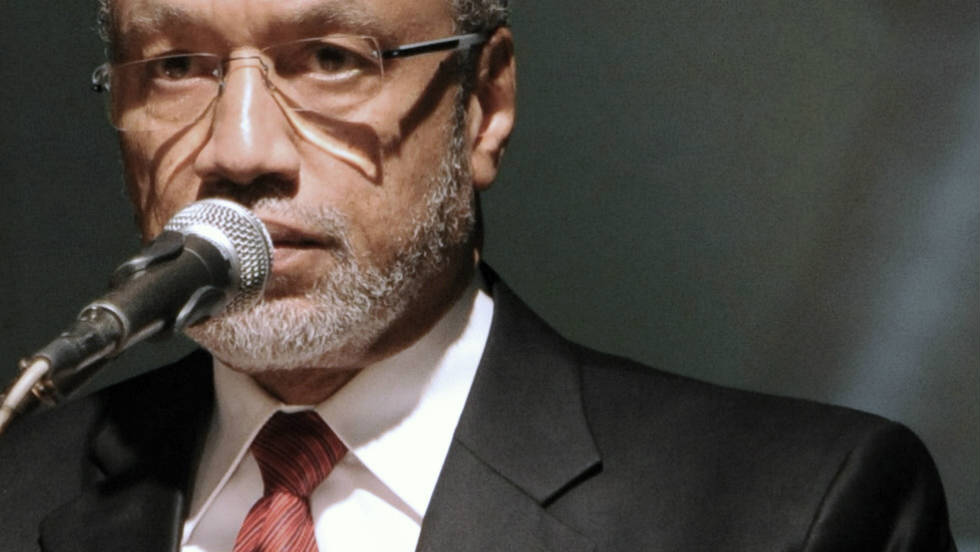
July 23, 2011 – Mohamed Bin Hammam is banned for life by FIFA after a two-day hearing into bribery allegations. The ban is annulled a year later due to lack of evidence.
Hide Caption
16 of 32
32 photos: FIFA corruption scandal timeline
October 21, 2011 – Sepp Blatter announces the introduction of four new task forces and a "Committee of Good Governance" aimed at reforming the organization and repairing its reputation.
Hide Caption
17 of 32
32 photos: FIFA corruption scandal timeline
March 30, 2012 – FIFA announces its executive committee has approved proposed changes to its Ethics Committee, splitting it into two entities -- one to investigate allegations and another to rule on them. It follows a report by the Independent Governance Committee (IGC) commissioned after Mohamed Bin Hammam's ban, that found FIFA's past handling of corruption scandals had been "unsatisfactory."
Hide Caption
18 of 32
32 photos: FIFA corruption scandal timeline
April 24, 2012 – The Council of Europe, a watchdog that oversees the European Court of Human Rights,criticizes Sepp Blatter in a damning report into FIFA's handling of bribery allegations. The report says it would be "difficult to imagine" that the FIFA president would have been unaware of "significant sums" paid to unnamed FIFA officials by sports marketing company International Sports and Leisure (ISL) in connection with lucrative contracts for World Cup television rights. However it makes no allegations that he had any involvement in corruption.
Hide Caption
19 of 32
32 photos: FIFA corruption scandal timeline
July 17, 2012 – Sepp Blatter announces that former U.S. attorney Michael J Garcia and German judge Hans-Joachim Eckert (pictured) have joined FIFA to probe allegations of wrongdoing. Their first task will be to investigate a Swiss court document after an investigation into alleged illegal payments made by FIFA marketing partner ISL to former FIFA president Joao Havelange and former executive committee member Ricardo Teixeira. However, they will also investigate old cases -- including the process surrounding the decision to award the 2018 and 2022 World Cups to Russia and Qatar. Meantime, Mohamed Bin Hamman is again suspended over new corruption allegations by the Asian Football Confederation (AFC), which he used to lead. Bin Hammam says he is innocent but in December 2012 he resigns all his football positions after a FIFA report finds him guilty of violating the conflict of interest clauses in its Code of Ethics and bans him from all football-related activity for life.
Hide Caption
20 of 32
32 photos: FIFA corruption scandal timeline
December 17, 2012 – President of the South African Football Association (SAFA) Kirsten Nematandani (pictured) and four other SAFA officials are suspended as an act of "good governance" following a report by FIFA, which adjudged four friendly matches ahead of Africa's first World Cup in 2010 had been fixed. SAFA later decides FIFA went beyond its mandate in suspending them before its investigation had concluded and reinstates the officials to their posts. In May 2015, Nematandani tells South African broadcaster ANN7 he has yet to hear from FIFA in relation to the investigation. "This is about my reputation," he says. "My name has to be cleared."
Hide Caption
21 of 32
32 photos: FIFA corruption scandal timeline
January 9, 2013 – FIFA imposes a worldwide lifetime ban from football on 41 players from Korea who became embroiled in match-fixing activities in their domestic league, extending a ban handed down by the Korea Football Association (KFA) in 2011. The charges relate to alleged match-fixing in Korea's domestic K-League competition. All but one case were centered on offering or accepting bribes to throw matches.
Hide Caption
22 of 32
32 photos: FIFA corruption scandal timeline
February 4, 2014 – A report by police agency Europol reveals that 380 matches across Europe have been fixedby an Asia-based crime syndicate, including World Cup and European Championship qualifiers as well as the continent's top club competitions. Scores of people have been arrested across 15 countries, it says. FIFA vows to act on the revelations, but says it will need help from outside agencies to eradicate match-fixing.
Hide Caption
23 of 32
32 photos: FIFA corruption scandal timeline
March 11, 2013 – FIFA says executive committee member Vernon Manilal Fernando of Sri Lanka has been suspended at the request of Michael Garcia and Hans-Joachim Eckert, co-chairs of the investigatory and adjudicatory bodies of the Ethics Committee respectively. No details of his alleged transgression were released, but FIFA said the decision was based on alleged violations of its Code of Ethics, including conflicts of interest, offering and accepting bribes, bribery and corruption, "in order to prevent the interference with the establishment of the truth with respect to proceedings now in the adjudicatory chamber." He is later given a lifetime ban, which he unsuccessfully appeals to the Court of Arbitration for Sport.
Hide Caption
24 of 32
32 photos: FIFA corruption scandal timeline
April 30, 2013 – An internal investigation by FIFA's Ethics Committee clears Sepp Blatter of misconduct in the bribery scandal, but his predecessor, Brazilian Joao Havelange, resigns as honorary president for his part in the scandal. Havelange and former executive committee members Ricardo Teixeira and Nicolas Leoz were all found to have accepted illegal payments from former marketing partner International Sports and Leisure (ISL) between 1992 and 2000.
Hide Caption
25 of 32
32 photos: FIFA corruption scandal timeline
May 6, 2013 – FIFA's Ethics Committee suspends outgoing executive committee member Chuck Blazer (pictured back right) for 90 days "based on the fact that various breaches of the Code of Ethics appear to have been committed" by the American. Blazer is former general secretary of CONCACAF, the body which governs football in North and Central America and the Caribbean, and his suspension follows a report by its integrity committee. Blazer denies any wrongdoing.
Hide Caption
26 of 32
32 photos: FIFA corruption scandal timeline
June 13, 2014 – German footballer Franz Beckenbauer, the only man to win the World Cup as captain and coach, is provisionally suspended from any football-related activity for 90 days for failing to cooperate with a FIFA corruption investigation. FIFA says Beckenbauer had been asked to help with its Ethics Committee's probe into allegations against Qatar 2022 and the World Cup bidding process. Beckenbauer tells German media that he did not respond to questions by the chairman of the Ethics Committee's investigatory body because they were in English and he did not understand them.
Hide Caption
27 of 32
32 photos: FIFA corruption scandal timeline
Hans-Joachim Eckert (pictured), chairman of the adjudicatory chamber of FIFA's Ethics Committee, releases a summary of the committee's investigation into the bidding process for the 2018 and 2022 World Cup. The summary, by Eckert, says Qatar and Russia were not guilty of any alleged corruption, clearing them of wrongdoing. Michael Garcia, the author of the full report, and chairman of the Ethics Committee's investigatory body, wanted the report to be published in full. Garcia says the summary contains "incomplete and erroneous representations of the facts and conclusions detailed in the investigatory chamber's report."
Hide Caption
28 of 32
32 photos: FIFA corruption scandal timeline
November 18, 2014 – FIFA lodges a criminal complaint with the Swiss judiciary relating to the "international transfers of assets with connections to Switzerland, which merit examination by the criminal prosecution authorities."
Hide Caption
29 of 32
32 photos: FIFA corruption scandal timeline
December 17, 2014 – Michael Garcia resigns as chairman of the investigatory body of the Ethics Committee, following FIFA's decision to throw out his appeal after he complained about the way his report into the World Cup bidding process had been summarized by Hans-Joachim Eckert.
Hide Caption
30 of 32
32 photos: FIFA corruption scandal timeline
December 19, 2014 – FIFA decides to publish a redacted version of Michael Garcia's investigative report into alleged corruption surrounding the bidding process for the tournaments. The decision was unanimously endorsed by FIFA's 25-person executive committee.
Hide Caption
31 of 32
32 photos: FIFA corruption scandal timeline
May 27, 2015 – At the request of U.S. officials, Swiss authorities raid FIFA's headquarters in Zurich and arrest seven people. Meantime, the U.S. Department of Justice announces the unsealing of a 47-count indictment detailing charges against 14 people for racketeering, wire fraud and money laundering conspiracy. They include FIFA officials accused of taking bribes totaling more than $150 million and in return provided "lucrative media and marketing rights" to soccer tournaments as kickbacks over the past 24 years. Separately Switzerland announces its own investigation into the awarding of the World Cup bids to Russia in 2018 and Qatar in 2022.
Hide Caption
32 of 32
32 photos: FIFA corruption scandal timeline
September 17, 2015 – FIFA secretary general Jerome Valcke was suspended until further notice.
Hide Caption
1 of 32
32 photos: FIFA corruption scandal timeline
September 14, 2015 – U.S. Attorney General Loretta Lynch announces that 'additional charges against individuals and entities' are likely following the assessment of new evidence.
Hide Caption
2 of 32
32 photos: FIFA corruption scandal timeline
September 9, 2015 – FIFA Vice-President Prince Ali Bin al-Hussein of Jordan adds his name to the list of candidates seeking to replace Sepp Blatter. The election at scandal-hit FIFA is on February 26, 2016.
Hide Caption
3 of 32
32 photos: FIFA corruption scandal timeline
July 30, 2015 – South Korean billionaire and former FIFA vice president, Chung Mong-Joon announces his intention to run for the top job in world soccer.
Hide Caption
4 of 32
32 photos: FIFA corruption scandal timeline
July 29, 2015 – European football chief Michel Platini, seen here with Blatter (left), is the leading candidate to replace the outgoing president. The former France captain is also a vice-president in FIFA's Executive Committee.
Hide Caption
5 of 32
32 photos: FIFA corruption scandal timeline
May 14, 2010 – A turbulent period for FIFA began in May 2010 when the world's governing body for soccer was presented with official bid documents by Australia, England, Netherlands/Belgium, Japan, South Korea, Qatar, Russia, Spain/Portugal and the United States for the 2018 and 2022 World Cups. During the ceremony at its Swiss headquarters, FIFA announced dates for inspections of the bidding nations from July-September.
Hide Caption
6 of 32
32 photos: FIFA corruption scandal timeline
May 16, 2010 – British newspaper Mail On Sunday reveals that English bid leader David Triesman (pictured here with soccer star David Beckham) was secretly recorded making comments about alleged attempts by Spain and Russia to bribe referees at the imminent 2010 FIFA World Cup.
Hide Caption
7 of 32
32 photos: FIFA corruption scandal timeline
November 18, 2010 – FIFA's Ethics Committee confirms the suspension of six FIFA officials including executive committee members Amos Adamu (pictured) and Reynald Temarii, after claims by Britain's Sunday Times newspaper that they offered to sell their World Cup votes. Adamu receives a three-year ban and $11,947 fine and Temarii a 12-month ban and a $5,973 fine. The committee also rules that there is no evidence to support allegations of collusion between rival bid teams. Both Adamu and Temarii appeal unsuccessfully to FIFA's Appeal Committee and Adamu later also files an unsuccessful appeal to the Court of Arbitration for Sport (CAS). In May 2015, FIFA bans Temarii for another eight years for allegedly accepting money from former Asian Football Confederation president Mohamed Bin Hammam to cover legal costs of his appeal of FIFA's 2010 ban.
Hide Caption
8 of 32
32 photos: FIFA corruption scandal timeline
November 29, 2010 – Issa Hayatou from Cameroon (pictured) is one of three FIFA officials -- the others Nicolas Leoz from Paraguay and Ricardo Teixeira from Brazil -- who are named in a BBC program which alleges they took bribes from the International Sports and Leisure (ISL) marketing company who secured World Cup rights in the 1990s. A day later, Hayatou says he is considering legal action against the BBC. All three would have voted on the hosts for the 2018 and 2022 World Cups. The International Olympic Committee's Ethics Commission later looks into the claims against Hayatou -- as he was an IOC member. It finds he had personally received a sum of money from ISL as a donation to finance the African Football Confederation (CAF)'s 40th anniversary and recommends he be reprimanded. In 2013, an internal investigation finds Leoz and Teixeira accepted illegal payments from ISL but says the acceptance of bribe money was not punishable under Swiss law at the time. Its report says that as both have resigned their positions with FIFA further steps over "the morally and ethically reproachable conduct of both persons" are superfluous.
Hide Caption
9 of 32
32 photos: FIFA corruption scandal timeline
December 2, 2010 – The winning bids for the 2018 and 2022 World Cup finals are announced. Russia wins the bid to host the 2018 tournament. But the big shock came when Blatter announced that Qatar would host the 2022 finals, despite FIFA's bid inspection report stating that hosting the World Cup in June and July would be"considered as a potential health risk for players, officials, the FIFA family and spectators, and requires precautions to be taken."
Hide Caption
10 of 32
32 photos: FIFA corruption scandal timeline
May 10, 2011 – Just a few weeks before FIFA's presidential vote, former English Football Association chairmanDavid Triesman testifies at a UK parliamentary enquiry into England's failed 2018 bid. Under the cover of parliamentary privilege, Triesman accuses FIFA Executive Committee members Jack Warner, Nicolas Leoz, Ricardo Teixeira and Worawi Makudi of trying to secure cash and privileges in return for their vote. In other evidence submitted to the committee from the Sunday Times, it was alleged that FIFA vice-president Issa Hayatou along with fellow Executive Committee member Jacques Anouma has been paid $1.5 million to vote for Qatar as the 2022 World Cup host. All those accused, and the Qatar Football Association, strenuously deny the allegations.
Hide Caption
11 of 32
32 photos: FIFA corruption scandal timeline
May 26, 2011 – FIFA announces it will investigate Jack Warner (pictured), who ran the CONCACAF federation covering Central and North America, and Mohamed Bin Hammam, head of the Asian Football Confederation, over bribery allegations. It follows a report by fellow Executive Committee member Chuck Blazer alleging that they paid $40,000 worth of bribes to secure the support of members of the Caribbean Football Union. They deny the claims, with Warner promising a "tsunami" of revelations to clear his name. Bin Hammam claims the accusations are part of a plan to force him to withdraw as a candidate for FIFA's presidency. He is incumbent Sepp Blatter's only opponent in FIFA's presidential election due to be held June 1.
Hide Caption
12 of 32
32 photos: FIFA corruption scandal timeline
May 27, 2011 – FIFA says it will expand its corruption probe to include Sepp Blatter, after Mohamed Bin Hammam claimed Blatter knew about cash payments he was accused of giving to national football association in exchange for pro-Hammam votes during Qatar's 2022 World Cup bid. Blatter maintains that the allegations are "without substance," and two days later is exonerated by FIFA's Ethics Committee.
Hide Caption
13 of 32
32 photos: FIFA corruption scandal timeline
May 29, 2011 – But FIFA's Ethics Committee upholds the complaints against Mohamed Bin Hammam (pictured) and Jack Warner. Bin Hammam is effectively barred from standing in the FIFA leadership election. Warner's tsunami turns out to be an email, where secretary general Jerome Valcke seems to suggest that Qatar "bought" the right to host the 2022 World Cup. After initially threatening legal action, Qatar withdraws its complaint when Valcke explains he was referring to Qatar's large, and legal, campaign budget, rather than bribes. Warner faces no further action following his resignation and the presumption of innocence remains.
Hide Caption
14 of 32
32 photos: FIFA corruption scandal timeline
June 1, 2011 – Despite a last minute attempt by the English FA to postpone the vote -- a proposal which garnered just 17 out of the available 208 votes -- Sepp Blatter is re-elected for a fourth term as president of FIFA at the 61st FIFA Congress at Hallenstadion in Zurich. He vows to learn from past mistakes and undertake a reform agenda.
Hide Caption
15 of 32
32 photos: FIFA corruption scandal timeline
July 23, 2011 – Mohamed Bin Hammam is banned for life by FIFA after a two-day hearing into bribery allegations. The ban is annulled a year later due to lack of evidence.
Hide Caption
16 of 32



FIFA was plunged into crisis in late May when seven officials were charged by the FBI with racketeering, wire fraud and money laundering.
The charges are part of a U.S. prosecution that indicted a total of 14 people from around the globe.
Meanwhile, a separate probe by Swiss authorities is investigating potential corruption into the bidding process for both the 2018 and 2022 World Cups, which will be hosted by Russia and Qatar.
Qatar's controversial bid for the latter was backed by Platini, and the tournament has since been switched from the emirate's summer months to the winter following concerns over unsafe temperatures.
Platini, South Korea billionaire Chung Mong-Joon, Jordan's Prince Ali bin Al-Hussein, ex-Brazil player Zico and Liberian FA chairman Musa Bility have all announced their intention to run for president of FIFA..
To stand in the February 2016 presidential election, candidates will need letters of support from at least five FIFA member nations.
U.S investigation
Meanwhile, a U.S. law enforcement official says the U.S. Justice Department is coordinating and sharing information with the OAG on the ongoing FIFA investigation.
Blatter is among the senior FIFA officials who remain under investigation, U.S. law enforcement officials told CNN.
The importance of the Swiss investigation against Blatter is that while the FBI has been focusing on his possible role in FIFA corruption, there are limits to U.S. jurisdiction.
U.S. prosecutors have claimed jurisdiction based on the fact financial transactions that are part of the alleged bribery schemes used U.S. banks or occurred in the U.S.
The U.S. investigators have had some trouble directly linking Blatter to those U.S. transactions, according to a U.S. official familiar with the investigation. Swiss investigators may have an easier time making those links, if they exist, since Blatter is based there.http://edition.cnn.com/2015/09/25/football/sepp-blatter-fifa-swiss-prosecutors/index.html

No comments:
Post a Comment